
Bestseller
Budapest: Madame Tussauds Ticket + POP&ROLL Access
From 30,78 €
Buy the ticket
Opening in May 2023, Madame Tussauds in Budapest is the 24th location of the world-famous wax museum and the first in Central and Eastern Europe. Housed in the prestigious Dorottya Palace, just a few steps from Vörösmarty Square and the Chain Bridge, this 2,000-square-metre museum offers an immersive experience combining international celebrities and Hungarian icons.
What distinguishes the Budapest location from the brand’s other locations is the focus on local culture: 17 of the 51 wax figures are dedicated exclusively to Hungarian personalities, selected through a public survey involving thousands of citizens. The museum not only displays statues, but also recreates scenic environments inspired by the capital’s iconic monuments, from the Buda Castle Tunnel to the historic baths, offering visitors a journey that celebrates both local heritage and world stars.
The experience at Madame Tussauds in Budapest is divided into several thematic sections, each designed to offer not only the viewing of the statues, but also interactions and sets that recreate authentic atmospheres.
The section dedicated to Hungarian characters forms the beating heart of the museum. Here you can meet Saint Stephen, the first king of Hungary and founder of the Christian state, depicted wearing the royal crown and ceremonial robes. Next to him is Matthias Corvinus, the Renaissance king who transformed Buda into a European cultural centre in the 15th century.
Among the most photographed figures isEmpress Sissi, whose presence in Budapest is still strongly felt. The statue recreates one of her gala dresses, complete with jewellery and historical details verified in the imperial archives. There is no shortage of great political reformers such as Lajos Kossuth and István Széchenyi, considered the fathers of Hungarian modernisation in the 19th century.
The composer Ferenc Liszt appears in his most famous pose at the piano, while the poet Sándor Petőfi, symbol of the 1848 revolution, is immortalised in the act of declaiming his verses. One of the museum’s highlights is the figure of Béla Lugosi, the Hungarian actor who played Count Dracula in 1930s Hollywood films, who is present in period costume with a cloak and theatrical make-up.
Among the contemporary characters are Olympic swimmer Katinka Hosszú, winner of three gold medals in Rio 2016, and model Barbara Palvin, the first Hungarian to become a Victoria’s Secret Angel. Their presence testifies to the museum’s focus on celebrating recent sporting and cultural glories as well.
The section devoted to world celebrities includes figures of Beyoncé in one of her stage costumes, Leonardo DiCaprio, Tom Cruise on his iconic motorbike, and Cristiano Ronaldo in his Real Madrid uniform (periodically updated to reflect his transfers). Particularly popular is the statue of Freddie Mercury, which recreates one of his most famous poses during Queen’s concerts.
A distinctive feature of the Hungarian museum is the exclusive presence of three figures you won’t find in any other Madame Tussauds location in the world: Bud Spencer, Chuck Norris and Peter Falk (Lt. Columbo). This choice reflects the particular popularity of these actors in Hungary, where the films of Bud Spencer and Terence Hill are considered generational cults.
The museum incorporates reproductions of Budapest monuments into its setting. You can walk through the Buda Castle Tunnel, a 350-metre-long tunnel connecting Buda with Pest under the castle hill. The reconstruction of the Danube Promenade includes architectural elements from the riverfront, while the historical baths area recreates the atmosphere of the famous Széchenyi thermal baths with evocative steam and lighting.
One of the most popular installations is the Fishermen’s Bastion, where visitors can ‘act’ in a film scene thanks to a green screen system that inserts their video into a sequence set in the actual monument.
Unlike traditional museum exhibitions, here the statues can be touched and approached freely. Staff encourage visitors to try on stage costumes, sit next to the figures and use the numerous selfie points distributed along the route. Interactive screens allow visitors to discover interesting facts about the making of the statues, while light and sound shows accompany some of the thematic sections.
The Cinema Café, located halfway along the route, offers a unique sensory experience with wall and ceiling projections that immerse visitors in film sequences while they enjoy a coffee or snack.
The standard adult ticket allows access to the entire exhibition and interactive installations. Reduced rates are available for children (4-15 years), students (16-25 years with ID) and family tickets that include two adults and up to three children at a 20% discount. Children under the age of 4 enter free of charge, but still require a free baby ticket to apply online.
Advance online purchase is strongly recommended, which guarantees entry at the chosen time and avoids queues at the ticket office. Madame Tussauds is not included in the Budapest Card.
The ticket includes access to the POP&ROLL ART TOILET, an art installation adjacent to the museum that offers an original visual experience. The Cinema Café within the route is freely accessible, while drinks and souvenirs are charged for.
Madame Tussauds Budapest is open daily from 10 a.m. to 6 p.m., with last admission at 5 p.m. on weekdays (Monday-Thursday) and 7 p.m. on weekends (Friday-Sunday). Times may vary during national holidays or special events, which can be checked on the official website.
A complete visit takes an average of 60-90 minutes, but the time can be extended if you actively participate in all the interactive stations and take many photographs. There are no time limits: you can stay as long as you wish during opening hours.
The museum is located at Dorottya utca 6, in the heart of the 5th district of Pest, about 100 metres from the Danube. The M1 metro line (yellow) stops at Vörösmarty tér, from where you can reach the entrance in a 2-minute walk across the square of the same name. This is the most convenient option as the M1 is the oldest metro line in continental Europe and connects directly to Deák Ferenc tér station, the main public transport hub.
Several tram and bus lines stop nearby: tram 2, which runs along the riverfront offering spectacular views of the Danube and Buda Castle, stops at Vigadó tér (5-minute walk). Buses 15 and 115 connect the museum with various parts of the city, while night service is provided by lines 914 and 950.
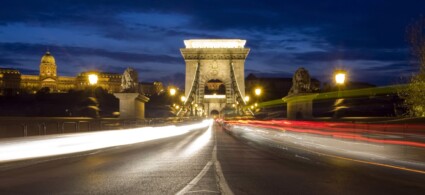
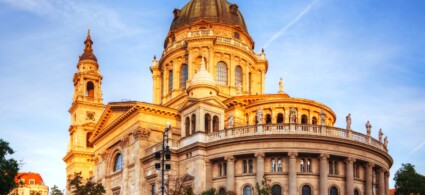
For those staying in Buda, crossing the Chain Bridge on foot (10-15 minutes) offers a memorable panoramic experience. The museum is about 600 metres from St Stephen’s Basilica, making it easy to combine the two visits.
Madame Tussauds owes its name to Marie Tussaud, born Marie Grosholtz in Strasbourg in 1761. She learned the art of wax modelling in Paris from her mentor, doctor Philippe Curtius, who used this technique for anatomical purposes. During the French Revolution, Marie was commissioned to make the death masks of Louis XVI and Marie Antoinette after their execution, a traumatic experience but one that brought her great notoriety.
In 1802, she moved to England with her collection, exhibiting it on travelling tours for over thirty years. Success led her to open the first permanent museum in Baker Street, London, in 1835. The attraction quickly became famous for its ‘Chamber of Horrors’, which displayed scenes of crimes and controversial characters, which contributed to the museum’s popularity with the Victorian public.
Today, Madame Tussauds has over 20 locations on four continents, from Amsterdam to Hong Kong, from Las Vegas to Dubai. Each figure takes around three months to make and involves a team of 25 specialised artists in the London studio. The process includes making silicone casts from the subject’s body (when possible), manually inserting over 250,000 real hairs one by one, and hand painting every detail of the skin in multiple layers to recreate the natural transparency of the epidermis.
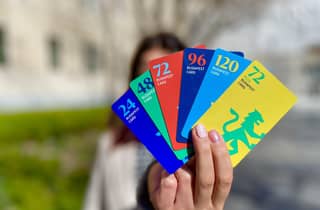
City Card allow you to save on public transport and / or on the entrances to the main tourist attractions.

 Hotel
Hotel  Budget accommodations
  Apartments
  Family Hotel
  Luxury Hotel