Minaro Hotel Tokaj
Tokaj - Csurgo volgyi ut
Book now
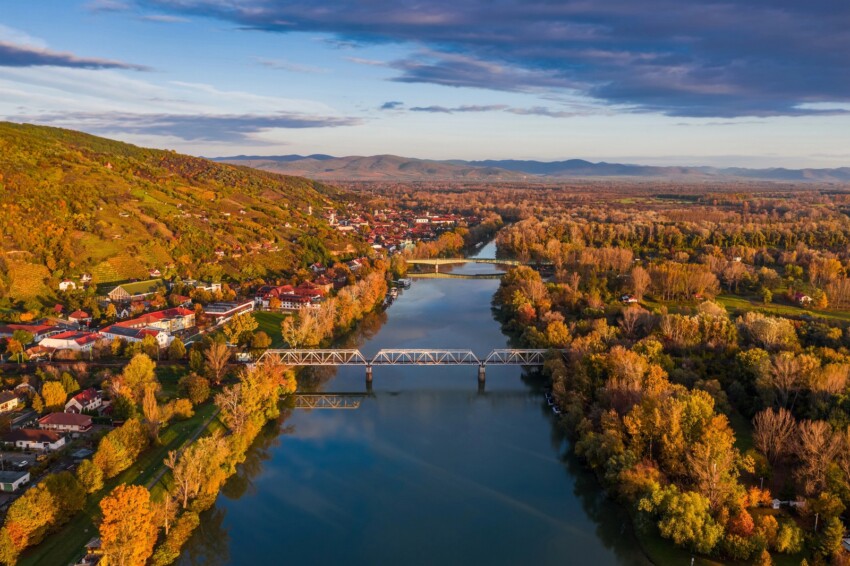
Tokaj is a small town of 4,100 inhabitants located in the north-eastern region of Hungary, at the confluence of the Tisza and Bodrog rivers, 245 kilometres from Budapest. Known the world over for the prestigious Tokaji Aszú wine, often called ‘the wine of kings and the king of wines’, this town is the heart of one of the oldest demarcated wine regions in the world. Documented production dates back to 1571, although the first vines were probably planted by Italian settlers in the 13th century.
In 2002, UNESCO inscribed the Historic Cultural Landscape of the Tokaj wine region on its World Heritage list, recognising the exceptional value of the 5,500 hectares of terraced vineyards on the south-facing volcanic slopes. This recognition further consolidated the international reputation of the area, which boasts an uninterrupted wine-making tradition of more than eight centuries and a vineyard classification system established in 1730, well before the French cru classification.
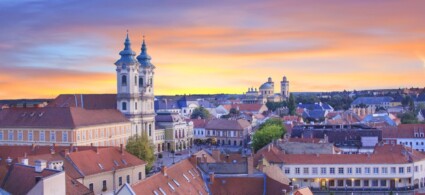
The town retains a charming historic centre characterised by colourful Baroque houses, ancient synagogues bearing witness to the rich Jewish community that contributed significantly to the wine industry, and more than 1,200 historic cellars carved into the volcanic tuff. These underground cellars, some of which stretch for kilometres, naturally maintain the ideal conditions of temperature and humidity necessary for the ageing of the precious liqueur wines.
To visit Tokaj is to immerse oneself in a timeless atmosphere where wine culture permeates every aspect of daily life, from tastings in centuries-old cellars to harvest festivals celebrating the tradition of picking botrytised grapes, the secret of the legendary Aszú.
The city offers a perfect balance of wine heritage, historical attractions and natural beauty. Although small in size, Tokaj concentrates in just a few square kilometres the architecture, specialised museums and landscapes that have made this region world famous. The ideal visit combines urban exploration with tastings in historic cellars and excursions to surrounding vineyards.
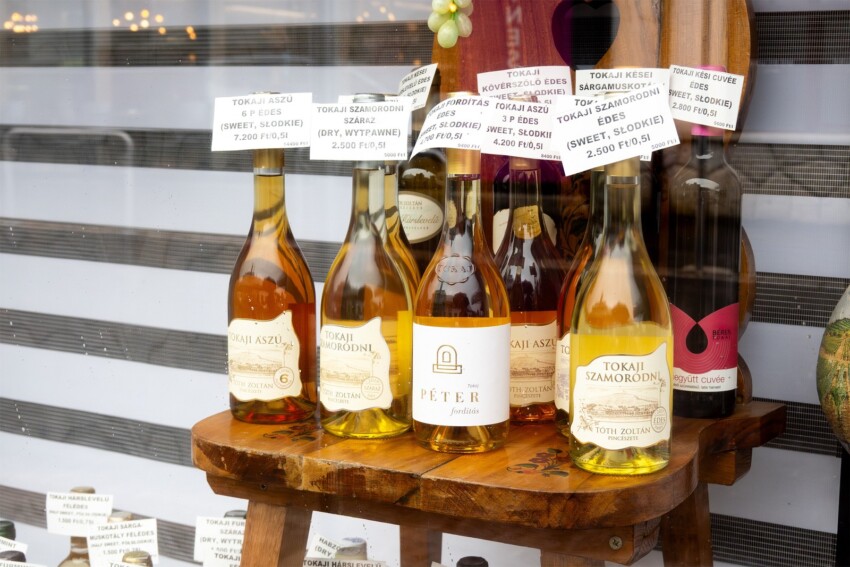
The Tokaji Múzeum occupies an elegant 18th-century neoclassical building in the city centre and is an essential first stop for understanding the history and wine culture of the region. The permanent exhibition illustrates the entire Tokaji production process through original tools, historical documents and a rich collection of vintage bottles dating back to the 17th century. Particularly interesting is the section dedicated to botrytis cinerea, the noble fungus that attacks ripe grapes creating the conditions for the production of Aszú.
The museum preserves autograph documents that testify to the appreciation of Tokaji by historical figures such as Louis XIV of France, who called it “vinum regum, rex vinorum” (wine of kings, king of wines), and Tsar Peter the Great, who in 1703 established a permanent garrison of Russian soldiers in Tokaj with the task of guaranteeing supplies for the imperial court. One room is dedicated to the vineyard classification system of 1772, which divided the plots into three quality categories still recognised today.
The museum also includes access to a historic 16th-century wine cellar where you can observe traditional Hungarian oak barrels (called gönci) of 136 litres, the standard unit of measurement for Tokaji. The guided tour, available in English and Hungarian, takes about 45 minutes and costs 1,500 forints. The museum is open from Tuesday to Sunday from 10 a.m. to 5 p.m., while during the winter months (November-March) the opening is reduced to Fridays, Saturdays and Sundays.
The Zsinagóga in Tokaj, built in 1889 in the Neo-Romanesque style, is one of the most significant testimonies to the flourishing Jewish community that made up over 40% of the city’s population at the end of the 19th century. The Jews of Tokaj played a key role in the commercial development of viticulture, handling most of the exports to Poland, Russia and Austria. The building has an imposing façade with decorative polychrome brick elements and stained glass rose windows.
The interior, which could accommodate up to 400 worshippers, still retains the upper galleries reserved for women and the holy ark decorated with floral motifs. During World War II, the community was decimated: of the 1,000 Jews living in Tokaj in 1941, only a few dozen survived deportation to the Auschwitz concentration camp in May 1944. The synagogue was abandoned after the war and only recently underwent a restoration that transformed it into a cultural centre.
Today, the building hosts temporary exhibitions, classical music concerts and cultural events, keeping the memory of the vanished community alive. In the rear courtyard is a memorial with the names of Tokaj’s Holocaust victims. Visiting is free of charge but donations are accepted for maintenance. Opening hours vary depending on scheduled events, so it is advisable to check with the tourist office before visiting.
Tokaj’s system of underground cellars stretches more than 40 kilometres beneath the city and represents a unique architectural heritage. Excavated in volcanic tuff between the 15th and 19th centuries, these tunnels naturally maintain a constant temperature of 10-12 degrees Celsius and a humidity of 90 per cent, ideal conditions for maturing liqueur wines. The walls are covered with a thick layer of black mould called Cladosporium cellare, which helps regulate humidity and protects the barrels from excessive evaporation.
Among the most prestigious cellars open to the public is the Rákóczi Pince, which dates back to the 16th century and belonged to the princely Rákóczi family. This cellar is spread over three underground levels with a depth of 28 metres and contains hundred-year-old barrels still used for ageing. The tasting typically includes five to six wines, from the dry Furmint to the Aszú of five puttonyos, accompanied by explanations of the traditional classification indicating sugar concentration.
Tokaj Oremus, owned by the Álvarez family (producers of Louis Roederer champagne), offers modern tours that combine tradition and oenological innovation. The winery has state-of-the-art technology but still uses traditional methods for the production of Aszú. It is strongly recommended to book in advance, especially during the harvest season (September-November) when many wineries are busy harvesting.
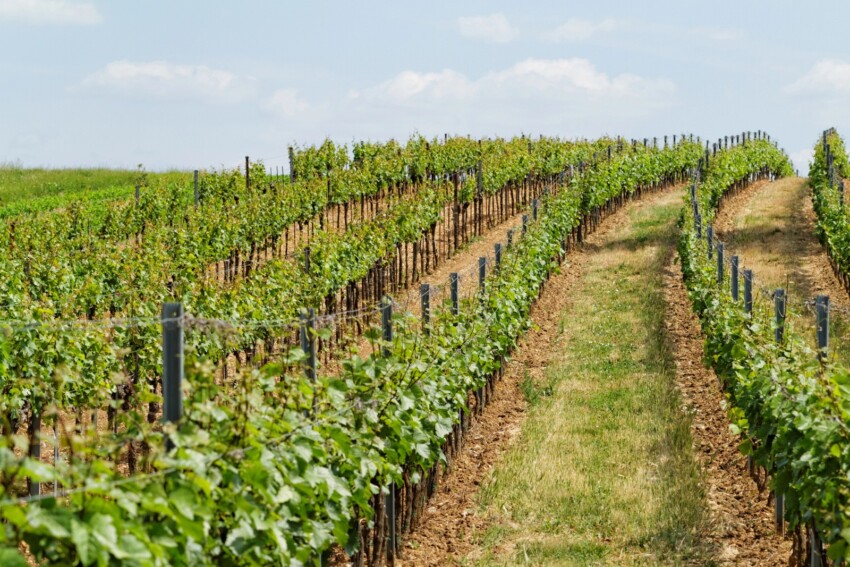
Tokaji-hegy rises 512 metres above sea level immediately south of the town and offers the most spectacular view of the entire wine region. The path to the summit winds through terraced vineyards cultivated mainly with the indigenous Furmint and Hárslevelű varieties, the base grapes for Tokaji production. During the ascent, which takes about 45 minutes of moderate walking, you pass through plots historically classified as ‘first class’ in the 1772 system.
At the top is a 25-metre-high wooden viewing tower, opened in 2017, which provides a 360-degree view of the confluence of the Tisza and Bodrog rivers, the mosaics of vineyards stretching towards the Zemplén Mountains, and on days of optimal visibility, even the Slovak Carpathians to the north. The summit area includes picnic tables and information panels explaining the terraced cultivation system and the importance of the volcanic soil composition.
The route is well signposted and free of charge, accessible all year round but particularly impressive during the October grape harvest when the vines take on autumn colours. For those who prefer a less strenuous approach, a carriage path allows you to reach the summit by car, with a small car park available near the tower. The hill is also the starting point for longer treks into the Aggtelek-Tokaj National Park, a protected area that protects the biodiversity of the mountain region.
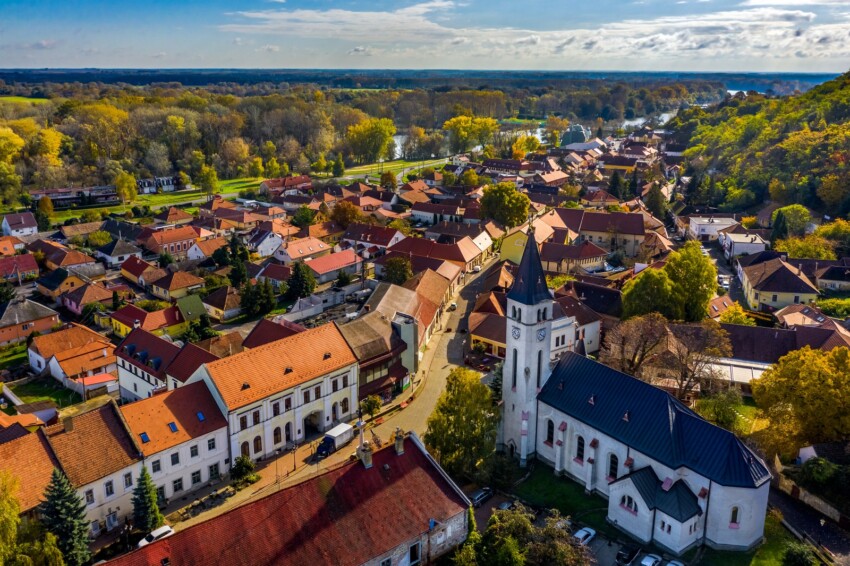
The Görögkatolikus templom in Tokaj, built in 1806, is a testimony to the presence of the Ruthenian minority in the region. The building, modest in size but with distinctive architecture, features elements typical of Eastern European Greek Catholic churches, with the golden onion dome dominating the urban skyline. The neoclassical façade contrasts elegantly with the richly decorated interior in the Eastern tradition.
The most precious element is the 18th century iconostasis, a dividing wall decorated with icons painted on panels separating the nave from the presbytery according to the Byzantine rite. The icons depict Christ Pantocrator, the Virgin Mary, the apostles and the most venerated saints in the Eastern Orthodox tradition. The painting technique follows the style of the Western Ukrainian iconographic schools, with the characteristic use of egg tempera and gold leaf.
The church is still used for religious services of the small local Greek Catholic community, celebrated with the Byzantine rite in the Hungarian language. It is possible to visit it outside mass times (see the times posted on the door), always respecting the sacredness of the place.
Accommodation options in Tokaj range from family-run guesthouses in the old town, often run by local winemakers offering private tastings, to modern wine hotels with spas and gourmet restaurants set among the vineyards. The waterfront area is particularly popular for its river views and proximity to restaurants, while farmhouses in the surrounding hills provide an immersive experience among the vineyards.
Prices are generally affordable, with good accommodation ranging from 15,000-20,000 forints per night. It is advisable to book well in advance during the grape harvest (September-October) when the city hosts numerous wine and food events.
Tokaj is 245 kilometres from Budapest and can be reached by car by taking the M3 motorway east to Mezőkövesd, then continuing on route 37 through Miskolc and finally on route 38 (total time: about 3 hours). The direct train departs from Keleti station in Budapest at a frequency of 4-5 daily. The journey takes about 2 hours and 45 minutes with a change in Miskolc, and the ticket costs 4,265 forints in second class.
Renting a car in Budapest is the most convenient option for visiting the wine region with freedom, as you can also explore the wineries in neighbouring villages such as Tarcal, Mád and Tolcsva. The Volánbusz bus makes daily connections from Népliget station with a journey time of about 3 hours and 30 minutes, being the cheaper but less frequent alternative.
What's the weather at Tokaj? Below are the temperatures and the weather forecast at Tokaj for the next few days.
Tokaj is located innorth-eastern Hungary, in the Borsod-Abaúj-Zemplén region, at the strategic confluence of the Tisza and Bodrog rivers. The city is 245 kilometres from Budapest, 70 kilometres from Miskolc (the regional capital), 55 kilometres from Nyíregyháza and 180 kilometres from Debrecen. The Slovakian border is only 30 kilometres to the north-east.

 Hotel
Hotel  Budget accommodations
  Apartments
  Family Hotel
  Luxury Hotel