Fagus Hotel Conference & Spa
Sopron - Ojtózi Fasor 3
Book now
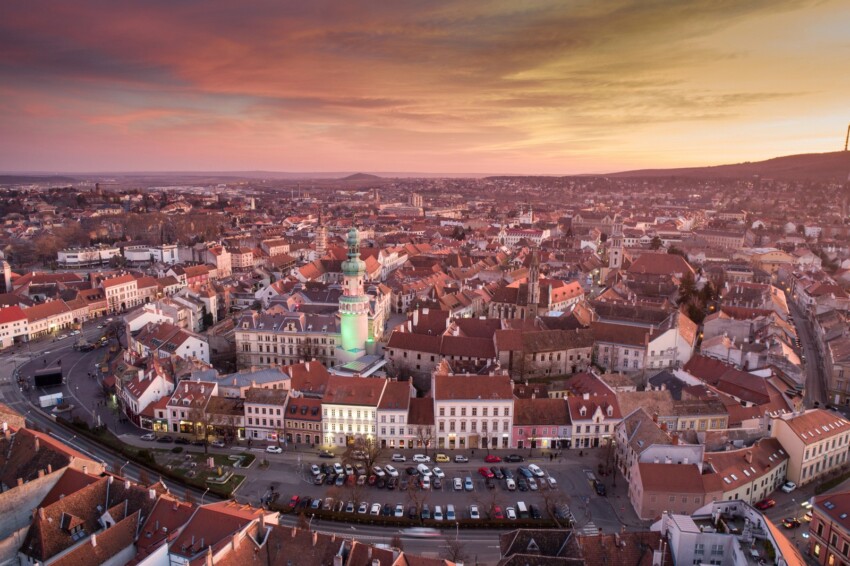
Nestled between the green hills of the Sopron Mountains and the shores of the picturesque Lake Neusiedl, Sopron is one of the most charming pearls of western Hungary. Known as the ‘City of Loyalty’ because of the famous referendum in 1921 that confirmed it as Hungarian territory, this small town of about 60,000 inhabitants boasts a unique location on the border with Austria, between Lower Austria and Burgenland, creating a kind of Hungarian enclave surrounded by Austrian territory.
The city traces its roots back to Roman times, when it was known as Scarbantia, an important centre in the province of Pannonia. Throughout the centuries, Sopron has miraculously preserved its horseshoe-shaped medieval town centre, bordered by ancient walls that testify to its strategic importance along the Amber Route, the historic trade route that connected the Baltic Sea to the Mediterranean.
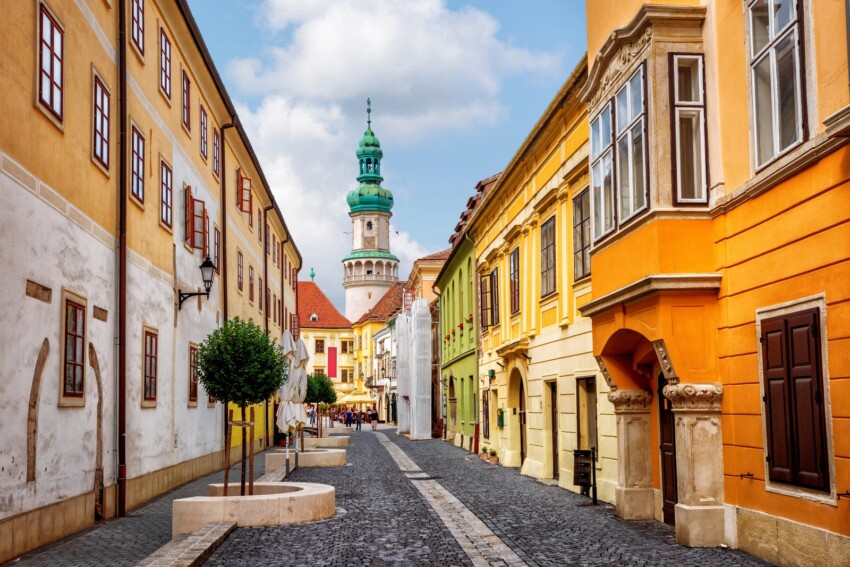
Sopron’s architectural heritage is extraordinary: the city boasts the second highest number of historical monuments in Hungary after Budapest, with an extraordinary overlap of styles ranging from Romanesque to Gothic, from Renaissance to Baroque. The Fire Tower, the undisputed symbol of the city, dominates the Fő tér (Main Square) along with aristocratic palaces, fascinating museums and churches that tell eight centuries of European history.
The proximity to Vienna (only 60 kilometres) and the strategic location between Austria, Hungary and Slovenia have made Sopron a cultural crossroads where Magyar, Germanic and Slavic traditions coexist harmoniously. Today, the town is also renowned for its wine tradition, with fine Kékfrankos (Blaufränkisch) growing on the surrounding slopes, and for its role in contemporary European history as the scene of the famous 1989 ‘Pan-European Picnic’.
The old town of Sopron is a veritable open-air museum, where every building, every alley and every square tells centuries of history. The peculiar horseshoe shape of the medieval centre, still surrounded by the ancient walls, creates a unique atmosphere that transports visitors back in time.
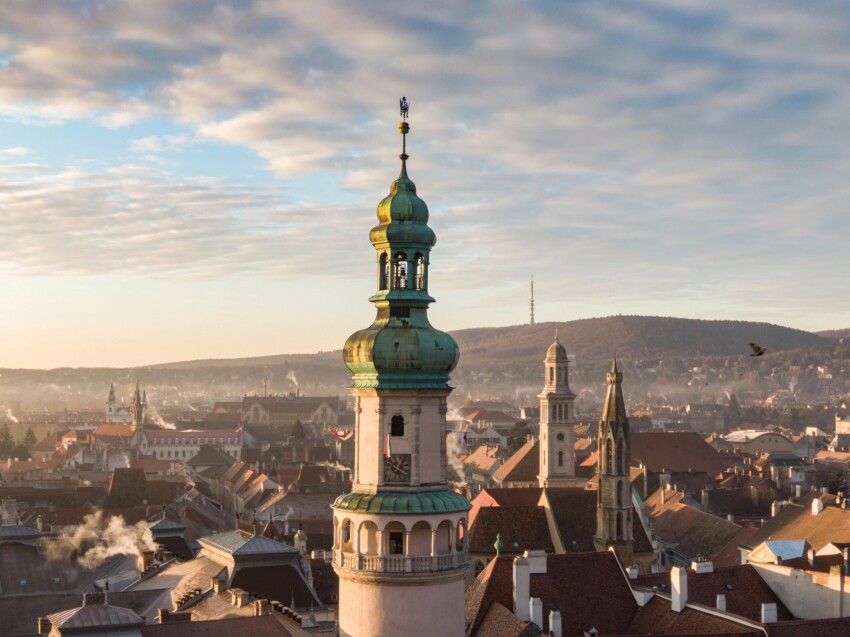
The Fire Tower is the undisputed symbol of Sopron and the city’s most iconic building. At 58 metres high, this majestic building dominates the Fő tér and offers a spectacular panoramic view of the town and the surrounding Sopron Mountains. The building encompasses thousands of years of history: its foundations rest on the remains of Roman fortifications from the 2nd century, while the structure has gone through several construction phases since the 12th century.
The tower’s current appearance is the result of a fascinating architectural layering: the medieval stone base, the Gothic central section and the Baroque crowning from 1680, added after the devastating fire of 1676 that destroyed much of the city. Historically, the tower housed the fire watchman who, from the Baroque balcony at mid-height, constantly monitored the city to sound the alarm in case of fire or enemy invasion.
Access to the top requires climbing 200 steps along a narrow spiral staircase, but the effort is amply repaid by the breathtaking view that sweeps from the rooftops of the old town to the surrounding vineyards and the Austrian Alps on the horizon. Inside the tower is a small museum displaying historical artefacts, including remains of statues from the Roman forum and documents illustrating the evolution of the city.
At the base of the Fire Tower is the Loyalty Gate (Hűség-kapu), a symbolic monument erected in 1921 to commemorate one of the most significant events in the city’s history. After the First World War, the Treaty of Trianon of 1920 assigned Sopron to Austria along with all of Burgenland. However, on 14 December 1921, the inhabitants of Sopron were asked to express their preference through a popular referendum.
By an overwhelming majority, the citizens chose to remain Hungarian, demonstrating the loyalty to the motherland that earned Sopron the title ‘Civitas Fidelissima’ (Loyal City), conferred by the regent Miklós Horthy. The gate is decorated with sculptural groups depicting Hungaria surrounded by the loyal citizens of Sopron, a work celebrating this crucial moment in the town’s identity.
The monument represents not only an important historical testimony, but also the strong emotional bond that still unites the people of Sopron to their land and traditions. The Fidelity Gate has become an identity symbol that tells the complex story of a border town, suspended between two cultures but proudly Hungarian.
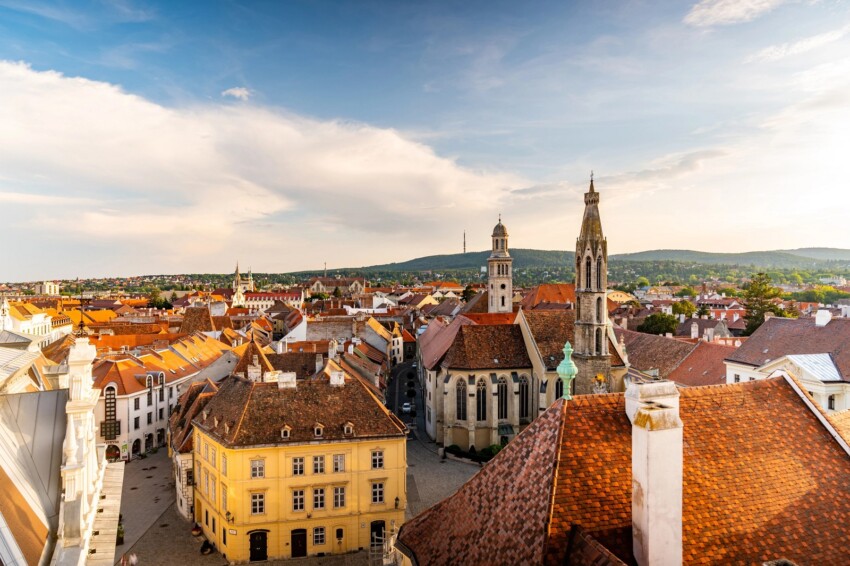
The Fő tér is the beating heart of Sopron and one of the most fascinating examples of a historical square in Central Europe. This cobbled space corresponds exactly to the area of the ancient Roman forum of Scarbantia, creating a striking urban continuity spanning almost two millennia. The square is surrounded by historical buildings that testify to the different eras and architectural styles that characterised the evolution of the city.
In the centre of the square stands the monumental Trinity Column, a masterpiece of Hungarian Baroque erected in 1701 in thanksgiving for the end of the plague epidemic in 1700 that had devastated the city. The column, richly decorated with statues of saints and angels, represents one of the finest examples of Baroque votive sculpture in western Hungary.
Among the most significant buildings facing the square is the Old Town Hall (Ó Városháza), built in 1896 for the millennium celebrations of the founding of Hungary. Its eclectic façade combines historical elements with celebratory decorations that enhance Hungary’s history and national identity. The square is also home to numerous historical cafés and restaurants where you can enjoy traditional Hungarian and Carinthian cuisine in an authentic and atmospheric atmosphere.
The Storno House, located at number 8 on Fő tér, is one of Sopron’s most charming historical residences and houses an exceptionally valuable art collection. The building, originally built in the Gothic style and later transformed in the Baroque period, is characterised by an elegant corner bow window that makes it instantly recognisable.
The house boasts a prestigious history: between 1482 and 1483 it hosted King Matthias Corvinus during the Siege of Vienna, one of the most important military events of 15th century Hungary. In 1872 it was purchased by the Storno family, originally from Canton Ticino in Switzerland, a dynasty of chimney sweeps who achieved fame and fortune by becoming art restorers and collectors.
Ferenc Storno (1821-1907) became the most famous restorer in the Austro-Hungarian Monarchy, working on works of art and monuments of exceptional importance. The interior of the house, inhabited by the family from 1875 to 1984, has remained largely intact and today offers an authentic insight into aristocratic and bourgeois life in the late 19th century. The rooms are embellished with original decorations made by the owners themselves and house a vast collection ranging from period furniture to paintings, from ceramics to valuable antiques.
The Fabricius House, located at 6 Fő tér, is one of the oldest houses in Sopron and today houses an important museum complex spanning millennia of history. The 14th-century building is named after Endre Fabricius, the town mayor and magistrate who was its owner, but its fame is also linked to the fact that Franz Liszt held three historical concerts there.
The archaeological museum on the upper floors, reached by an elegant Renaissance staircase, offers a fascinating journey through the civilisations that inhabited this region: from the Illyrians to the Celts, from the Romans to the Hungarians. A special section is dedicated to the Amber Way, the ancient trade route that passed through Sopron itself, connecting the Baltic Sea with the Roman Empire.
Among the most significant exhibits are a mysterious Iron Age sun disk, the function of which remains unknown to scholars, and the precious ‘Cundpald Chalice ‘, a more than 1,200-year-old travel chalice that may have belonged to a Bavarian bishop who evangelised the Avars. On the ground floor there is also an exhibition dedicated to the Bourgeois Residences, which faithfully reconstructs the flats of a wealthy family of the time, offering an authentic insight into everyday life in historic Sopron.
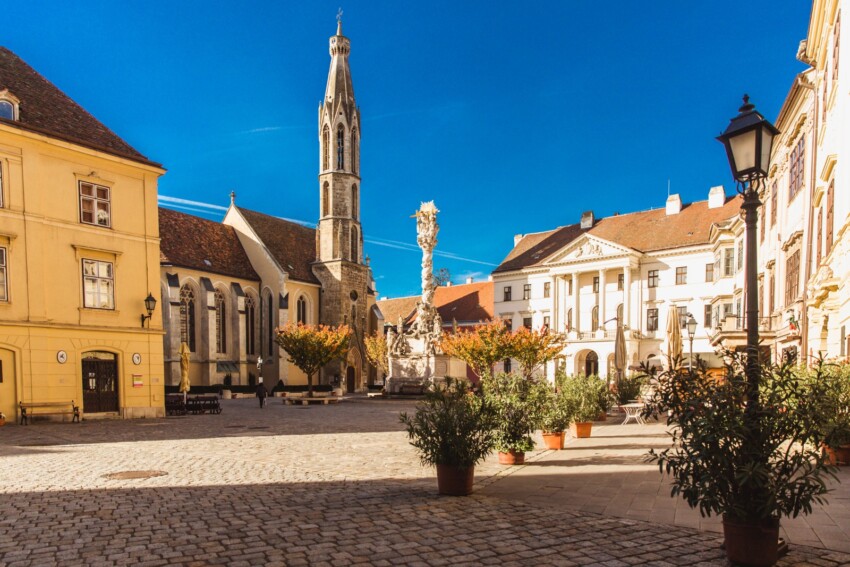
The Church of the Goat, whose official name is St Michael’s Church, is one of the most interesting religious buildings in Sopron. Erected in 1330 and later modified in the neo-Gothic style on the exterior façade, this church owes its curious popular name to a local legend according to which a goat discovered a hidden treasure that enabled the financing of the construction.
In reality, the name derives more prosaically from the coat of arms of the Gantz family, benefactors who contributed significantly to the construction of the building and whose coat of arms depicts a goat. The interior of the church retains original Gothic elements that create an evocative and solemn atmosphere, while the historical importance of the building is evidenced by the fact that coronations and diets (parliamentary assemblies) of the Hungarian nobility were held here in the 17th century.
The church overlooks Fő tér, creating one of the most photographed views of Sopron, with its neo-Gothic façade contrasting harmoniously with the surrounding Baroque palaces and the Fire Tower in the background, composing an urban picture of rare harmony and elegance.
Sopron offers an excellent selection of accommodation that reflects the welcoming character and traditional Hungarian hospitality. The town, although small in size, boasts a varied hotel offer, ranging from boutique hotels to family-run guesthouses, always characterised by excellent value for money.
The historical centre is an ideal choice for those wishing to fully experience the medieval and baroque atmosphere of the city. Historic hotels and guesthouses are often housed in renovated period buildings, where traditional architecture blends with modern comforts. The proximity to the Fő tér and the main attractions makes it easy to explore Sopron on foot.
The Lővérek area on the slopes of the Sopron Mountains attracts those seeking tranquillity and contact with nature. This green area is home to hotels surrounded by forests, ideal for hiking and outdoor activities, while remaining just minutes from the city centre.
Sopron enjoys an exceptional strategic location on the Hungarian-Austrian border, making it easily accessible from many European cities. The proximity to Vienna (60 kilometres) and the location along important European communication axes ensure efficient connections by various means of transport.
By car, Sopron is accessible via the M85 motorway that connects it to Budapest (220 kilometres, approximately 2 hours and 30 minutes) and to the Austrian motorway network to Vienna (60 kilometres, 1 hour). For those coming from Western Europe, the most convenient route is through Austria using the A2/A3 motorway. Motorway vignettes are required for both countries: theHungarian motorway requires the purchase of an e-vignette.
Rail connections are excellent thanks to Sopron’s location on the Vienna-Budapest railway line. Regional trains connect Sopron to Vienna (1 hour 30 minutes), Bratislava (2 hours), Graz (3 hours) and Budapest (3 hours). The railway station is a 10-minute walk from the historic centre. For those coming from southern Austria, regular connections are also available from Klagenfurt and Villach.
International buses connect Sopron with many European destinations, with regular services to Vienna, Budapest, Bratislava and other Central European cities.
What's the weather at Sopron? Below are the temperatures and the weather forecast at Sopron for the next few days.
Sopron is located in thefar north-west of Hungary, in theAlpokalja region, at the foot of the Sopron Mountains and on the shores of Lake Neusiedl (Fertő tó in Hungarian).
The city creates a peculiar Hungarian enclave almost entirely surrounded by Austrian territory, and is strategically important: it is only 60 kilometres from Vienna, 90 kilometres from Bratislava and 220 kilometres from Budapest.


 Hotel
Hotel  Budget accommodations
  Apartments
  Family Hotel
  Luxury Hotel