Hotel Central
Pécs - Bajcsy Zsilinszky Utca 7
Book now
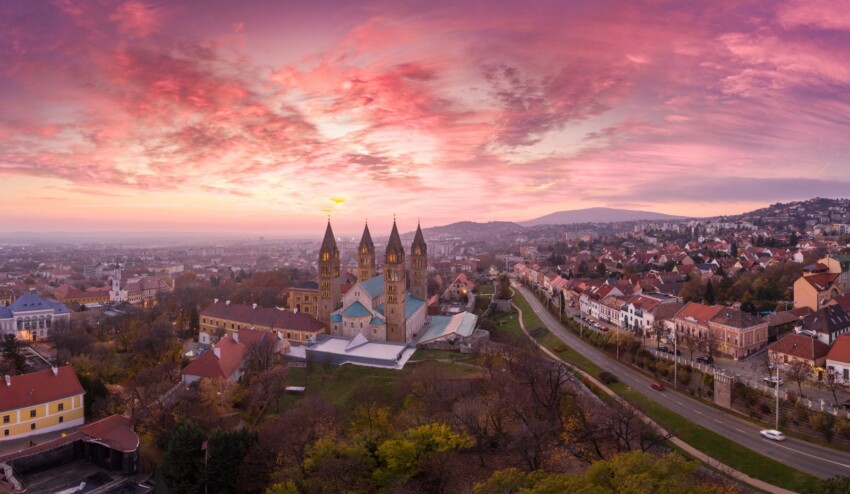
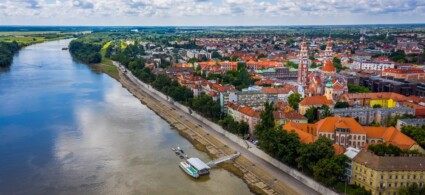
Nestled at the foot of the Mecsek Mountains in southern Hungary, Pécs represents one of the country’s most fascinating cultural treasures. Hungary’s fifth-largest city by population with some 150,000 inhabitants, this ancient urbe preserves an extraordinary historical heritage spanning two thousand years of European civilisation, from the Roman Sopianae to the evocative vestiges of Ottoman rule.
In 2010, Pécs was awarded the prestigious title of European Capital of Culture along with Istanbul and Essen, an accolade that celebrated its exceptional artistic wealth and unique multicultural identity in Europe. The perfectly preserved historical centre recounts this extraordinary cultural stratification through Austro-Hungarian Baroque buildings, Ottoman mosques turned into churches, a monumental Romanesque cathedral and, above all, the early Christian necropolis of Sopianae, declared a UNESCO World Heritage Site in 2000.
The city owes part of its international fame to the famous Zsolnay ceramics, masterpieces of Hungarian craftsmanship recognisable by their characteristic iridescent glazes and metallic colours. The Zsolnay Cultural Quarter, resulting from the conversion of the historic factory, today represents one of the most ambitious urban regeneration projects in Hungary, transforming industrial archaeology into a vibrant artistic and cultural centre.
The geographical location, only 30 kilometres from the Croatian border, gives Pécs a particularly mild climate and an almost Mediterranean atmosphere, rare for central Europe. The Balkan influences are reflected in its gastronomy and the liveliness of its streets, animated by one of the oldest universities in Europe (founded in 1367), which gives the city a youthful and cosmopolitan energy.
The artistic and architectural heritage of Pécs is revealed through monuments bearing witness to millennia of European history. From Roman heritage and Ottoman traces to Baroque and Art Nouveau masterpieces, each era has left its indelible mark on this extraordinary city.
The Sopianae Early Christian Necropolis represents one of the most important archaeological sites in Europe and Hungary’s only UNESCO heritage site in the category of early Christian funerary architecture. Discovered in 1782 with the Sepulchral Chamber I dedicated to St. Peter and St. Paul, this extraordinary testimony of the 4th century AD is located in the north-western part of the city, at the foot of the Cathedral, on the southern slopes of the Mecsek Mountains.
The archaeological complex comprises 20 excavated monuments and over 500 tombs grouped around the main monuments, representing the largest and densest collection of funerary monuments in the northern and western Roman provinces. The structures consist of two architectural levels: the underground chambers dug into the limestone, where the dead were buried in sarcophagi or brick tombs, and the above-ground memorial chapels that served as both burial and ceremonial sites for the wealthy families of Sopianae.
The burial chambers are richly decorated with frescoes of extraordinary quality depicting biblical scenes and early Christian symbols. Recurring subjects include images of the Apostles Peter and Paul, Jonah swallowed by the great fish, Daniel in the lions’ den, Sadrac, Mesac and Abednego in the fiery furnace, the fall of Adam and Eve and the Good Shepherd. The frescoes are complemented by finely executed floral, geometric and lattice motifs.
Room I (called Peter and Paul) is considered the most famous early Christian building in Pannonia. The northern wall shows the two apostles pointing to the Christogram, the symbol of Christ. Room II (called the Pitcher) has a niche in the north wall with a fresco of a pitcher and a glass, symbols of the thirst of the pilgrim soul. The Early Christian Mausoleum, discovered in 1975, is the most impressive structure in the entire complex, with exceptional frescoes depicting key biblical scenes.
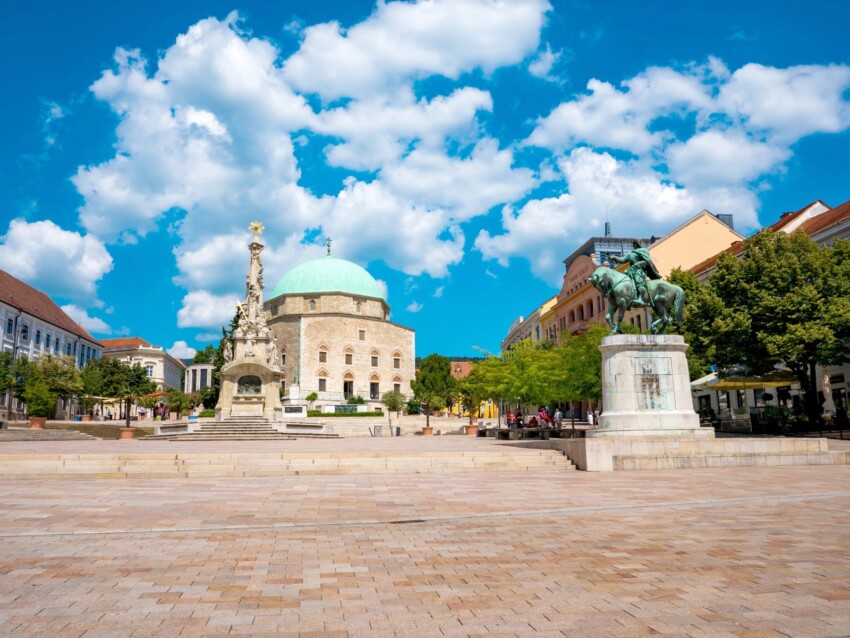
In the heart of Széchenyi tér, the main square of Pécs, stands the most recognisable symbol of the city: the Gazi Kasim Pasha Mosque, built during the Ottoman rule between 1543 and 1686. This extraordinary building represents the most important example of Ottoman architecture preserved in Hungary and bears witness to one of the most significant historical periods for Pécs.
The mosque was built using materials from the demolition of medieval Christian churches, creating a fascinating architectural palimpsest. After the Christian reconquest, the building was converted into a Catholic church, but retained its original Ottoman structure: the characteristic blue dome dominating the profile of the square, the harmonious proportions of the interior space and the Islamic decorative elements still visible on the walls.
Inside, visitors can admire the Arabic inscriptions still legible on the walls, the mihrab (prayer niches oriented towards Mecca) and the remains of geometric frescoes typical of Islamic art. The coexistence of Muslim architecture and Catholic furnishings added later creates a unique atmosphere of intercultural dialogue. The light filtering through the windows under the great dome generates a contemplative atmosphere that recalls the original religious function.
The building represents an exceptional case of architectural syncretism, where the Muslim identity of the building coexists with its Christian function, perfectly symbolising the multicultural nature of Pécs and its ability to integrate the different historical heritages into a harmonious whole.
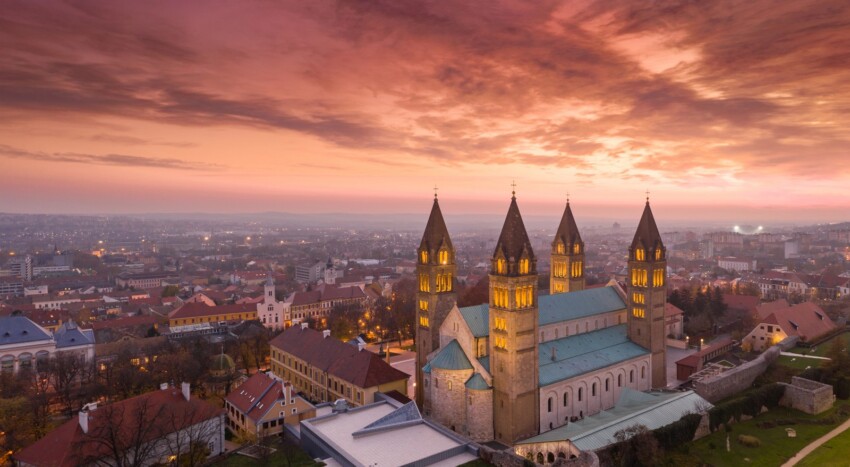
The Cathedral of Saints Peter and Paul dominates the urban landscape of Pécs with its four soaring bell towers, an unusual architectural feature that makes it instantly recognisable. This majestic Romanesque building, built in the 11th century and remodelled several times over the centuries, represents one of the masterpieces of Hungarian religious architecture.
The cathedral stands on the site of an early Christian basilica dating back to the 4th century, creating a spiritual continuity dating back thousands of years. The current building owes its current appearance mainly to the 19th century renovations and extensions in the Neo-Romanesque style, which gave the structure its characteristic monumentality. The four towers, visible only from the side due to the shape of the square, reach considerable heights and offer spectacular panoramic views of the city and the Mecsek Mountains from their tops.
Theinterior impresses with the spaciousness of the space, the richness of the frescoes decorating the walls and ceilings, and the monumental organ that is regularly used for concerts of sacred music that attract fans from all over Hungary. The side chapels hold valuable religious artwork and historical relics that tell the story of centuries of Christian devotion in the region.
The cathedral is also an important centre of archaeological excavations: many of the burial chambers of the early Christian necropolis have been found underground and in the immediate vicinity, creating a fascinating direct link between the contemporary church and its roots in Christian antiquity.
The Pasha Jakovali Hassan Mos que is the best-preserved Ottoman vestige in Pécs and one of the few mosques in Hungary to still retain its original 16th-century minaret. This building, now almost hidden among modern constructions that have grown up on its flanks, preserves the atmosphere and authenticity of Islamic architecture from the Ottoman era.
The minaret, 23 metres high, is traversed on the inside by an impressive spiral staircase that allows you to climb to the top, from where you can enjoy a privileged view of the historical centre of Pécs. The mosque itself has not undergone the transformations that affected other Ottoman buildings in the city: it retains its original function as a place of prayer and fully preserves Islamic architectural and decorative elements.
The interior features the typical geometric and calligraphic decorations of Islamic art, with Koranic inscriptions that are still perfectly legible and ornamental motifs that testify to the high level of craftsmanship of Ottoman artisans. The mihrab, the prayer niche oriented towards Mecca, retains its original decoration, while the ceiling displays the characteristic star motifs of Ottoman architecture.
The mosque is a precious and rare testimony of the Turkish heritage in Hungary, allowing visitors to fully immerse themselves in the atmosphere of the Ottoman era and to understand the importance of Pécs as an administrative and religious centre during Turkish rule.
The Zsolnay Cultural Quarter represents one of the most ambitious and successful urban redevelopment projects carried out in Hungary. Inaugurated between 2009 and 2011 on the occasion of Pécs’ nomination as European Capital of Culture, this complex was created from the conversion of the former Zsolnay factory, the famous ceramics factory that has made Pécs world famous since the 19th century.
Zsolnay ceramics, recognisable by their characteristic iridescent glazes with golden and green metallic highlights (eosin technology), decorated some of the most important Art Nouveau buildings in Europe, from the Matthias Church in Budapest to the Museum of Applied Arts in the Hungarian capital. The Zsolnay family created an industrial and artistic empire that contributed greatly to the cultural identity of Pécs.
Today, the district covers a vast area on the city’s outskirts and is home to museums, including the Zsolnay Museum, which exhibits the most valuable works of ceramic production, art galleries, exhibition spaces, cafés, restaurants and perfectly integrated green areas. The original industrial buildings, beautiful examples of 19th century industrial archaeology, have been carefully restored while preserving the historical character of the factory.
The district has become the main venue for festivals and concerts, hosting the famous Zsolnay Festival (Festival of Lights) during the summer, which illuminates the historic buildings with artistic projections and attracts international artists. The Zsolnay Mausoleum, located in the neighbourhood, can be visited and is a total work of art decorated entirely with ceramics from the manufactory, testifying to the artistry achieved by the family.
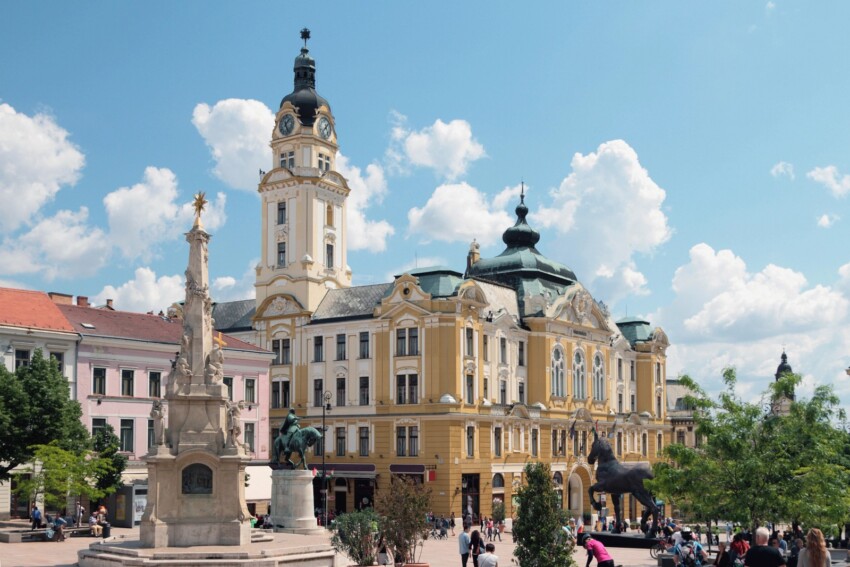
Pécs offers a wide range of accommodation that reflects the welcoming character and tradition of Hungarian hospitality. The city, not being a mass tourism destination, maintains affordable prices compared to other European destinations, guaranteeing excellent value for money for all types of accommodation.
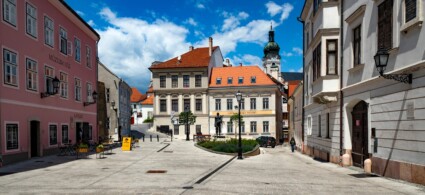
The historical centre is the preferred choice for those who wish to experience the authentic atmosphere of the city. Boutique hotels and family-run guesthouses often occupy restored historical buildings located in the narrow streets branching off Széchenyi tér. The central location makes it possible to walk to all major attractions, from UNESCO sites to historical cafés, museums and Ottoman mosques.
The university area, bustling with thousands of students, offers hostels, modern flats and budget accommodation particularly suitable for young travellers and those seeking a lively atmosphere. This area provides an excellent public transport network and a wide choice of restaurants, pubs and nightclubs frequented by the international student population.
Pécs enjoys a strategic location in southern Hungary that makes it easily accessible from the main European centres through efficient road and rail connections. Its proximity to the Croatian border makes it an ideal crossing point for those travelling between Central Europe and the Balkans.
By car, Pécs can be reached via the M6 motorway that connects it directly to Budapest (200 kilometres, 2 hours). For those coming from Vienna, the route covers approximately 320 kilometres (3 hours and 30 minutes) through Austria and western Hungary. The city is 30 kilometres from Croatia, 80 kilometres from Osijek and 250 kilometres from Zagreb, making it perfectly integrated into the south-east European road network.
Rail connections connect Pécs to Budapest with direct trains that take approximately 3 hours. Regional services provide connections with the main cities of southern Hungary and Croatia. The railway station in Pécs is about a 15-minute walk from the historical centre, which can also be easily reached by city bus.
Thenearest airport is Budapest-Ferenc Liszt (200 kilometres), which is connected to Pécs by direct bus services and train+bus combinations. For those coming from Western Europe, a good alternative is Vienna Airport (320 kilometres), from which there are direct bus connections to Pécs.
What's the weather at Pécs? Below are the temperatures and the weather forecast at Pécs for the next few days.
Pécs is located in south-western Hungary, in the Southern Transdanubian region, at the foot of the Mecsek Mountains. The city is 200 kilometres from Budapest, 30 kilometres from the Croatian border, 80 kilometres from Osijek in Croatia and 250 kilometres from Zagreb.

 Hotel
Hotel  Budget accommodations
  Apartments
  Family Hotel
  Luxury Hotel