Learn about the history and meaning of the Hungarian flag: the significance of the red-white-green colours, the origin in the 1848 revolution, and interesting facts about the flag.
The flag of Hungary is one of the most recognisable national symbols in Central Europe, with a history rooted in the independence uprisings of the 19th century. The red-white-green tricolour proudly flies on historical buildings, monuments and institutions throughout the country, representing centuries of struggle for freedom and national identity.
When you visit Budapest or other Hungarian cities, you will notice the constant presence of this flag, especially during the national holidays of 15 March and 20 August. The flag is not just a decorative element, but a living symbol of Hungarian history that still arouses strong emotions in citizens today.
The origins of the Hungarian tricolour flag date back to the 1848-49 Revolution, when Hungarians rose up against Habsburg rule. During these revolutionary uprisings, the poet Sándor Petőfi and other patriots adopted the tricolour as a symbol of national independence, inspired by the French flag of the 1789 Revolution.
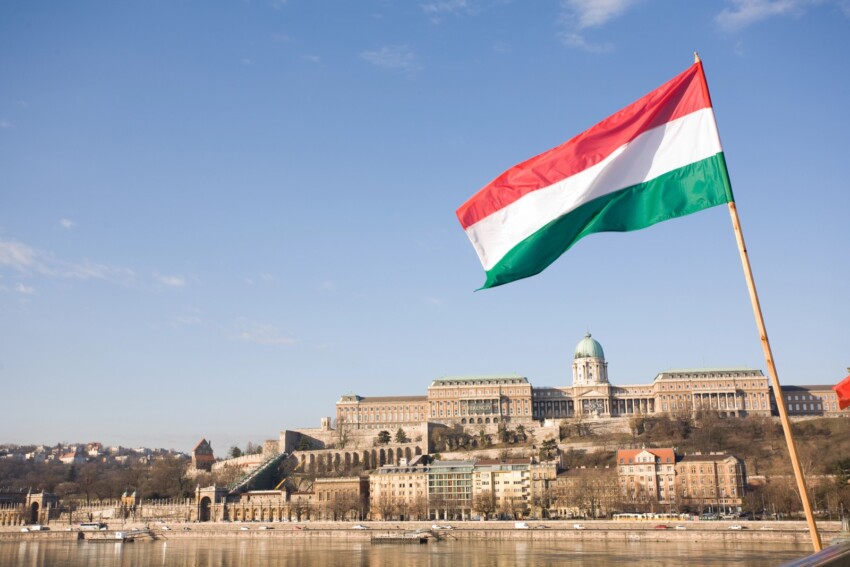
Prior to this period, the kingdom of Hungary mainly used royal coats of arms and gonfalons that included the colours red, white and green, but without a standardised national flag. The tricolour combination became official during the revolution, when it was hoisted for the first time on the Royal Palace in Buda on 15 March 1848.
After the defeat of the revolution in 1849, the flag was temporarily banned by the Austro-Hungarian Empire. However, with the Compromise of 1867 that established the dual Austro-Hungarian monarchy, the Hungarian tricolour was officially recognised as a national symbol, flanking the imperial flag in the Hungarian territories.
From the 20th century to the present
During the communist period (1949-1989), the Hungarian flag was modified with the addition of the socialist coat of arms in the centre, which included the red star and symbols of agriculture and industry. This version was deeply unpopular among the population.
During the Hungarian Revolution of 1956, the rioters symbolically cut the communist coat of arms from the flags, leaving a hole in the centre as a sign of protest. These ‘pierced’ flags became the symbol of resistance against the Soviet regime.
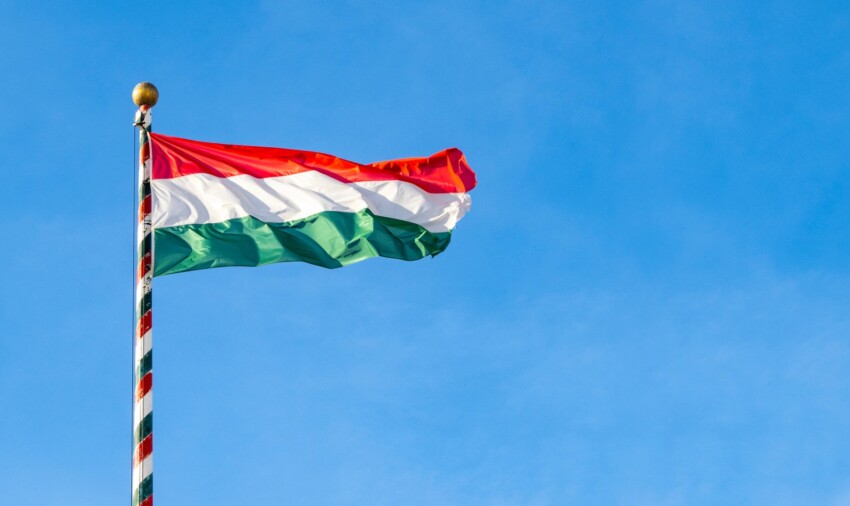
In 1989, with the fall of communism, Hungary again adopted the simple tricolour flag without coats of arms, returning to the original design of 1848. Since 1 January 2012, Hungarian law has strictly regulated the use and observance of the national flag.
Meaning of the colours
The three colours of the Hungarian flag have historical interpretations that have been consolidated over time, although there is no unambiguous official explanation codified in law. Popular tradition and historians have attributed different symbolic meanings to each horizontal band.
The red
The upper red band traditionally represents the strength, courage and blood shed by Hungarian martyrs in the many wars for independence. Some historians also link this colour to the Árpád dynasty, which founded the kingdom of Hungary in the year 1000 under St Stephen I.
The White
The central white band symbolises the loyalty, loyalty and moral virtues of the Hungarian people. This colour also recalls the rivers Danube and Tisza, which flow through the country, as well as the snow-capped peaks of the Carpathians, which historically demarcated the borders of the kingdom.
The Green
The lower green band represents hope for a better future and the fertility of the Hungarian plains, particularly the Great Hungarian Plain (Alföld), which makes up a large portion of the country’s territory. The green also recalls the hills and forests that characterise the northern regions of the country.
Curiosities
The Hungarian flag is often confused with the Italian flag because of the similarity in colours. The main difference is in the orientation of the bands: horizontal for Hungary, vertical for Italy. In addition, the Hungarian green is slightly darker than the Italian green.
The flag in sport
At international sporting events, the Hungarian tricolour is always present with great pride. Hungary has a strong Olympic tradition, particularly in swimming and water polo, and athletes often wear tricolour armbands or accessories during competitions.
The Hungarian national football team, known as the ‘Aranycsapat’ (Golden Team) in the 1950s, made the tricolour famous throughout the sporting world. Even today, fans of the national team display huge flags during home matches at the Puskás Aréna in Budapest.
How to save on transport and entrance fees
City Card allow you to save on public transport and / or on the entrances to the main tourist attractions.

 Hotel
Hotel  Budget accommodations
  Apartments
  Family Hotel
  Luxury Hotel