Hunguest Hotel Gyula
Gyula - Maróthy tér 1.
Book now
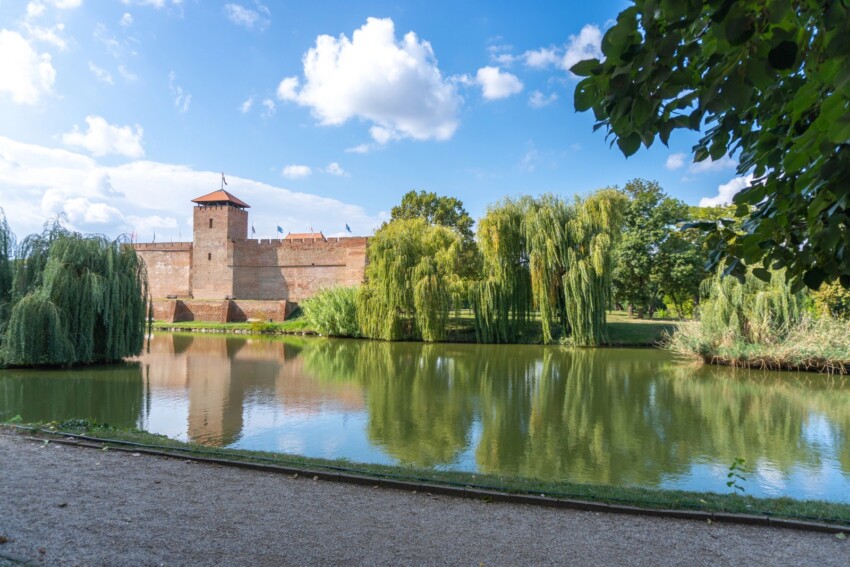
Gyula is a spa town located in the far south-east of Hungary, only 10 kilometres from the border with Romania, and is still a little-known destination for international tourism. With a population of 30,000, this small town in Békés County is home to one of the best-preserved medieval brick castles in the country and an exceptionally good thermal complex, fed by curative waters that flow at 72 degrees Celsius from a depth of 2,174 metres.
Gyula Castle, the only example of an intact brick Gothic fortress in Hungary, dominates the old town with its crenellated towers and is the symbol of the city. Built in the 15th century by the Maróthy family, the castle has withstood numerous sieges and today houses a museum and an atmospheric open-air theatre that comes alive with classical plays during the summer. Its red brick architecture creates a spectacular contrast with the green of the surrounding park and the blue of the thermal pools at its foot.
The Várfürdő Thermal Spa in Gyula is considered among the best in eastern Hungary, with thermal waters rich in sodium, chloride and iodine offering therapeutic benefits recognised by balneological medicine. The complex, inaugurated in 1959 and completely renovated in 2003, combines modern architecture and excellent functionality, with 17 pools spread over an area of 13 hectares surrounded by a centuries-old park of oak and plane trees.
The border location makes Gyula a cultural meeting point between Hungary and Romania, with a significant Romanian minority enriching the city’s cultural life. Visiting Gyula means discovering an authentic Hungary, far from the traditional tourist routes, where you can still savour the tranquillity of a small spa town nestled in the Great Hungarian Plain.
The city offers a concentration of historical and natural attractions packed into a compact centre that is easy to explore on foot. From a medieval castle to modern spa facilities, from centuries-old parks to specialised museums, Gyula presents an interesting mix of cultural heritage and wellness offerings, making it ideal for a relaxing two- or three-day stay.
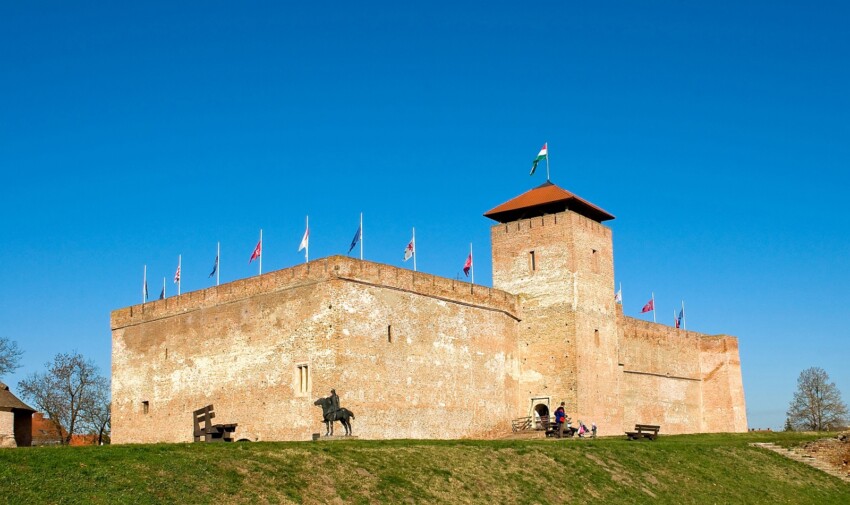
The Várszínház Gy ula (Gyula Castle) is the only completely preserved Gothic brick castle in Hungary and a masterpiece of 15th-century military architecture. Built between 1406 and 1420 by the Maróthy family on top of an earlier fortification, the building has an irregular rectangular ground plan with cylindrical towers at the corners and a central donjon reaching 26 metres in height. The perimeter walls, up to 3 metres thick, are made entirely of red brick arranged in Gothic style, creating a special colour effect that distinguishes this fortress from all other Hungarian castles.
During the Turkish occupation (1566-1695), the castle was transformed into an Ottoman fortress and underwent architectural changes to adapt it to the use of artillery. After the Christian reconquest, it was used as a warehouse and barracks, gradually falling into neglect until the 20th century restorations that restored it to its original medieval appearance. Today, the castle houses the Castle Museum, with exhibitions dedicated to local history, collections of medieval weapons and reconstructions of period rooms showing daily life in the 15th century.
The inner courtyard of the castle is transformed every summer into the stage of the Castle Theatre, one of the most important cultural events in eastern Hungary. Since 1964, classical plays, musicals and opera performances have been staged during July and August with sets using the medieval walls as a natural backdrop. The capacity is about 900 spectators and tickets must be booked well in advance. The castle can be visited year-round with opening hours of 10 a.m.-6 p.m. (April-October) and 10 a.m.-4 p.m. (November-March), entrance fee 1,600 adult guilders.
The Várfürdő Thermal Complex covers 13 hectares of parkland at the foot of the castle and is fed by a thermal spring that gushes out at a temperature of 72 degrees Celsius from a depth of 2,174 metres. The water, rich in sodium, chloride, iodine and bromine, is cooled down to temperatures between 26 and 38 degrees Celsius in the various pools and has recognised therapeutic properties for treating rheumatic disorders, gynaecological problems, skin conditions and stress.
The complex offers 17 pools, 7 of which are indoor and 10 outdoor, as well as saunas, steam baths, wellness areas and a modern wellness centre opened in 2017. The 1,050-square-metre adventure pool, with water slides, artificial caves and water games, is particularly popular with families, while the traditional thermal pools attract those seeking relaxation and healing benefits. Particularly impressive is the experience of the outdoor pools during the winter, when you can immerse yourself in the warm water at 36 degrees while the temperature outside drops below zero.
The centuries-old park surrounding the pools is home to more than 200 monumental trees, some of which are over 150 years old, creating large shaded areas ideal for relaxing between baths. The complex has several dining options, modern changing rooms with electronic lockers and equipped sunbathing areas. The day ticket costs 4,400 forints on weekdays and 4,900 at weekends, with reductions for children and pensioners. Opening hours are 9am-9pm daily. Compared to the baths in Budapest, Gyula offers a quieter atmosphere and slightly lower prices.
The Várkert (Castle Park) surrounds the medieval fortress with 17 hectares of monumental greenery and is one of the best preserved historical parks in eastern Hungary. Designed in the second half of the 19th century according to the romantic taste of the time, the park combines tree-lined avenues, artificial ponds, decorative bridges and flower beds that change appearance with the seasons. The vegetation includes more than 300 different tree species, including rare specimens of oriental plane trees, American red oaks and silver limes that grow to more than 25 metres in height.
In the middle of the park is an artificial lake fed by the Fehér-Körös river, where in summer you can rent paddleboats and rowing boats to admire the castle from an unusual perspective. The banks are populated by families of ducks and swans that have become accustomed to human presence and approach visitors. Along the park’s paths, you will find numerous benches and picnic areas, as well as a modern children’s playground installed in 2015.
The park is also home to several memorials, including the memorial dedicated to the heroes of the 1956 revolution and statues of historical figures associated with the city. During the summer, outdoor concerts and cultural events are organised in the green space in front of the castle. Access to the park is free of charge and is an ideal place for relaxing walks at dusk, when the grazing light emphasises the reddish colours of the castle bricks.
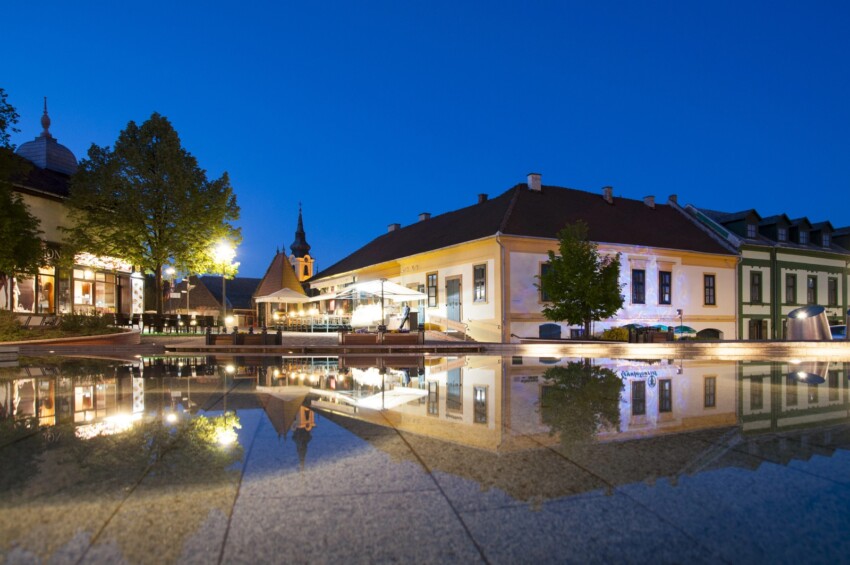
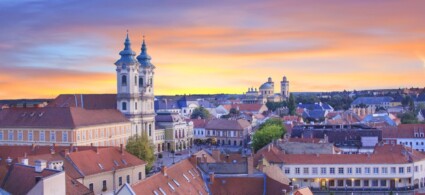
The historical centre of Gyula is built around Kossuth tér, the main square dominated by the neoclassical Town Hall built in 1841 to a design by architect János Tóth. The square retains its 18th-century urban layout, with two-storey buildings painted in pastel colours that create a Central European atmosphere characteristic of the cities of the Great Plain. The continuous arcades that connect the buildings on the north side, offering shelter during the summer rains and sunshine, are particular.
Kossuth Lajos Street is the main commercial artery, entirely pedestrianised, where shops, historical cafés and restaurants serving local specialities such as halászlé (spicy fish soup) and túrós csusza (pasta with cottage cheese and crispy bacon) are concentrated. The architecture is predominantly 19th century, with decorative facades in an eclectic style that testify to the city’s period of prosperity between 1860 and 1914.
In the central area, the Catholic Church of St Nicholas, an 18th-century Baroque building with a 57-metre-high bell tower visible from all parts of the city, is worth a visit. The interior contains 18th-century frescoes and a finely carved high altar. Also nearby is the Synagogue, built in 1860 in Moorish style and recently restored, which testifies to the presence of a thriving Jewish community before World War II. The old town is easily explored on foot in about an hour.
The Erkel Ferenc Museum is dedicated to the Hungarian composer Ferenc Erkel (1810-1893), born in Gyula and considered the father of Hungarian national opera. Located in the composer’s birth house, a perfectly restored Baroque building in Apor Vilmos tér, the museum tells the story of Erkel’s life and work through original documents, autograph scores, period musical instruments and personal items that belonged to the family.
The permanent collection includes the piano on which Erkel composed some of his most famous works, including ‘Bánk bán’ and ‘Hunyadi László’, considered masterpieces of the Hungarian operatic repertoire. The exhibition rooms reconstruct the bourgeois domestic environment of the 19th century with original furniture, while a multimedia section allows visitors to listen to the master’s main compositions accompanied by explanations of their historical and musical significance.
The museum regularly organises chamber concerts in the historic rooms, offering an intimate listening experience in a period setting. During the summer, special events with live performances of Erkel’s works are offered during the Castle Festival. The museum is open Tuesday to Saturday from 10 a.m. to 5 p.m., entrance fee 800 forints. The visit takes about 45 minutes and is particularly interesting for fans of classical music and Hungarian cultural history.
The castle area offers the greatest choice of accommodation, with modern hotels and family-run guesthouses within walking distance of both the historical sights and the spa complex. The spa area is home to several spa hotels offering wellness packages with direct access to the pools, ideal for curative stays. The historical centre features accommodation in renovated buildings with a Central European atmosphere and generally lower prices.
From Budapest, Gyula is 220 kilometres away and can be reached by car by taking the M5 motorway south to Szeged, then continuing on route 44 east through Békéscsaba (total time: about 2 hours 30 minutes). Car hire in Budapest is the most convenient way to visit other locations in eastern Hungary such as Debrecen.
By train, you have to leave from Keleti station for Békéscsaba (about 2 hours 40 minutes) and then take a local train to Gyula (a further 15 minutes), with a total cost of about 4,200 forints in second class. Direct buses leave from Népliget and take about 3 hours and 30 minutes. From Romania, Gyula can be easily reached from Arad (50 kilometres) by crossing the Vărșand border crossing.
What's the weather at Gyula? Below are the temperatures and the weather forecast at Gyula for the next few days.
Gyula is located in the far south-east of Hungary, in Békés County, only 10 kilometres from the border with Romania. The city is 220 kilometres from Budapest, 90 kilometres from Szeged (capital of the southern region), 70 kilometres from Békéscsaba (county capital) and 50 kilometres from the Romanian city of Arad.

 Hotel
Hotel  Budget accommodations
  Apartments
  Family Hotel
  Luxury Hotel