Danubius Hotel Raba
Győr - Árpád út 34.
Book now
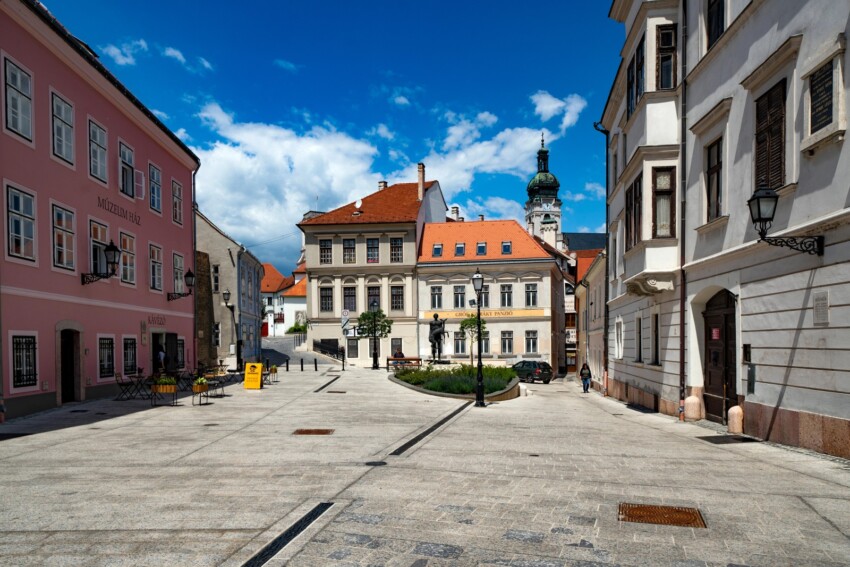
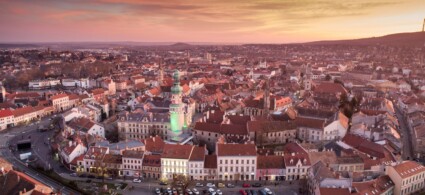
Located in the heart of western Hungary, at the confluence of three waterways – the Danube, the Rába and the Rábca – Győr stands out as one of the country’s most charming and best-preserved cities. This strategic crossroads between Budapest and Vienna has, over the centuries, moulded an extraordinarily beautiful Baroque historical centre, where colourful palaces, monumental churches and elegant squares narrate eight centuries of European history.
Founded by the Romans in the 1st century AD under the name of Arrabona, Győr has always played a crucial role as the commercial and cultural centre of Central Europe. The city has lived through glorious eras and troubled periods, from the Mongol invasions of the 13th century to the Ottoman occupation of the 16th century, each time emerging stronger and more determined. After the devastating fire of 1594, which Hungarian commanders set in order not to surrender the city to the Turks, Győr was reborn with Renaissance walls designed by Italian architects and a Baroque urban fabric that today constitutes its main architectural heritage.
Széchenyi Square, the heart of the city, is surrounded by perfectly restored buildings and is one of the finest examples of Baroque town planning in Hungary. The Basilica of the Assumption houses theherm of St. Ladislaus, one of the nation’s most important relics, while the Bishop’s Palace dominates the city from the top of the castle hill, offering extraordinary views of the three rivers that determined its fortunes.
Today, Győr skilfully combines tradition and modernity, with a thriving automotive industry – home to major Audi factories – and a vibrant cultural scene that includes fine museums, music festivals and a gastronomic offering that celebrates the authentic flavours of Magyar cuisine. Whether you are a history buff, Baroque art lover or simply a curious traveller, Győr will welcome you with that warmth typical of Hungarian hospitality.
The historical centre of Győr is a true jewel of Hungarian Baroque architecture, where every palace, every church and every square recounts centuries of history, art and tradition intertwined with the events of the whole of Central Europe.
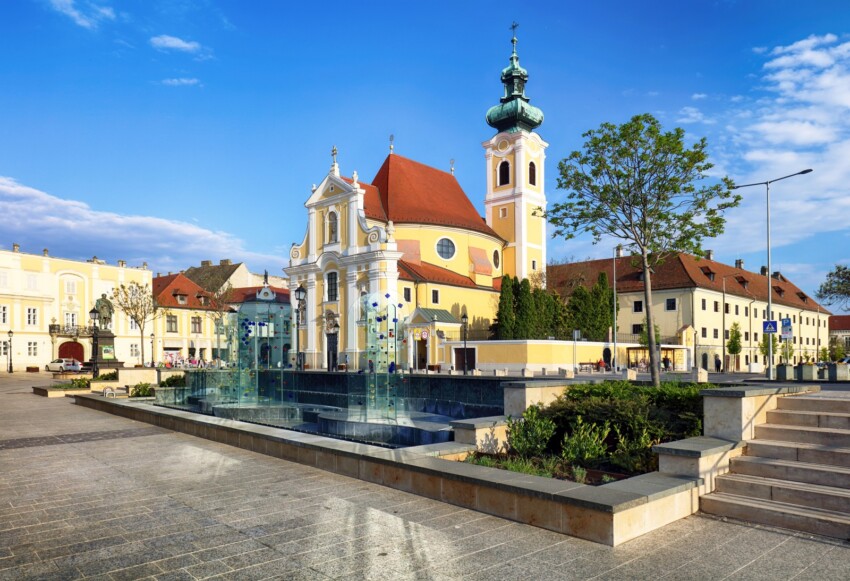
Széchenyi Square forms the social and cultural heart of Győr and one of the most beautiful urban spaces in Hungary. Surrounded by perfectly preserved Baroque buildings with colourful, ornate facades that create a fairy-tale atmosphere, this pedestrianised square is the ideal starting point for exploring the city.
In the centre of the square stands a historic fountain, which during the weekly markets is surrounded by stalls selling local products and traditional handicrafts. During the Christmas season, the square is transformed into an enchanting Advent market, with wooden stalls selling hot spiced wine (forralt bor), traditional sweets and handcrafted decorations, while twinkling lights create a magical atmosphere.
Among the historical buildings facing the square is the Benedictine Church of St Ignatius of Loyola, built by the Jesuits in the first half of the 17th century (1641) and inspired by the Church of Jesus in Rome. The imposing building features twin towers from the 18th century and houses beautiful frescoes on the ceiling and nave, as well as an altarpiece by Austrian artist Paul Troger. The adjacent monastery and school, built in the 17th century, complete the architectural ensemble.
Particularly fascinating is the Haus zum Eisernen Stock (House of the Iron Stump), a former caravanserai where an iron stump was once located on which travellers carved their names. Today the building houses the Imre Patkó Collection, a valuable selection of artworks collected by the famous journalist and art historian.
The Basilica of the Assumption of the Virgin Mary, also known as Győr Cathedral, is the spiritual heart of the city and one of Hungary’s most significant religious monuments. Located on Káptalan Hill, the oldest part of the city, the cathedral dominates the cityscape with its extraordinary fusion of architectural styles.
The original construction dates back to the11th century in Romanesque style, still evident in the apses, but was destroyed by the Mongols in 1240. It was rebuilt in the Gothic style, with elements that still characterise the structure today. Over the centuries, the building has undergone numerous transformations: two Gothic towers were destroyed by fire in the 16th century, while the current façade features a neoclassical style added later.
The interior of the cathedral, redesigned in the 17th century by Italian architect Giovanni Rava, is striking for its rich Baroque decoration. The most precious treasure kept inside is the Hermas of St. Ladislaus, a gilded and gem-studded reliquary containing the skull of the holy king, one of Hungary’s most revered relics. An icon of the Virgin Mary in the church is also said to have shed tears of blood, attracting pilgrims from all over Europe.
The bell tower, over 60 metres high, offers visitors making the climb a spectacular panoramic view of the city, the three rivers that flow through it and the surrounding hills. The cathedral remains an active place of worship and regularly hosts religious services and special events.
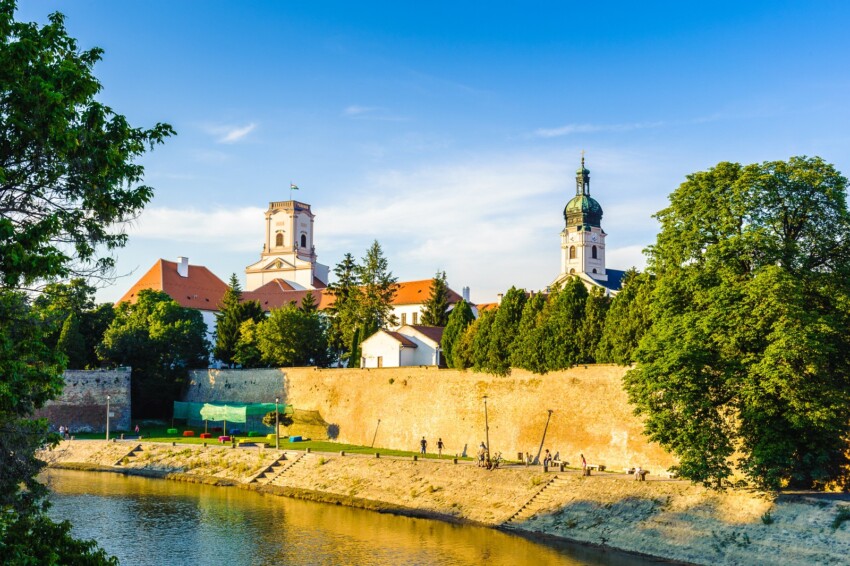
Győr Castle, also known as the Episcopal Castle or Bishop’s Palace, rises majestically on a hill and dominates the city with its imposing presence. This historical complex, whose origins date back to the Middle Ages, has undergone several transformations over the centuries, assuming its current appearance during the Baroque period.
The first castle was built in the11th century during the reign of King St. Stephen, but no visible traces remain. The tower, a characteristic element of the complex, was erected in the 14th century, although today only the lower part of that original structure is visible, while the upper part dates back to the 18th century, a period when the entire palace was renovated according to the canons of Baroque architecture.
The castle’s history is closely linked to the city’s defences against the Ottoman invasions. It was built specifically to protect Győr from Turkish incursions, and although the town was conquered in 1594, it subsequently became one of Hungary’s most inaccessible fortresses. The old defensive walls and ramparts, designed by Italian architects and builders in the Renaissance style after the expulsion of the Turks, are still partially visible and incorporated into the urban fabric of the city.
Walking around the castle, one can admire these remains of the fortifications, which offer an extraordinary panoramic view of the three rivers and the old town below. The watchtower that has remained intact allows visitors to enjoy a unique perspective over the city, particularly impressive at sunset when the golden light illuminates the waters of the rivers.
One of the most fascinating legends connected with the castle concerns an iron wind-marker rooster that stood on one of the bastions. According to tradition, the Turks who had occupied the castle claimed that they would only leave when the rooster came alive and started crowing. The heroic cobbler Ferkó Bajusz climbed the rampart at night and imitated the rooster’s crowing, convincing the Turks to flee.
The Győr Synagogue represents a valuable testimony of Hungarian Jewish history and is one of the most fascinating examples of religious architecture in the city. Built in 1870 in an elegant Art Nouveau style, this building is the second largest synagogue in Hungary and one of the largest in Europe, bearing witness to the thriving Jewish community that once populated the city.
The exterior architecture is striking for its elegant lines and typical Hungarian Art Nouveau decoration, with ornamental elements recalling oriental motifs and Jewish symbolism. The interior, characterised by spacious and bright spaces, still retains original decorative elements despite the fact that the difficult events of the 20th century had a profound effect on the local Jewish community.
Today, the synagogue no longer functions as a regular place of worship, but houses a permanent exhibition dedicated to the sculptor and painter János Vasilescu, an artist of Hungarian origin who left an important artistic legacy. The building is also used for cultural events, concerts and temporary exhibitions, keeping the dialogue between historical memory and contemporary culture alive. The Jewish Museum attached to the synagogue tells the history and traditions of the Jewish community in the Győr region through permanent and temporary exhibitions.
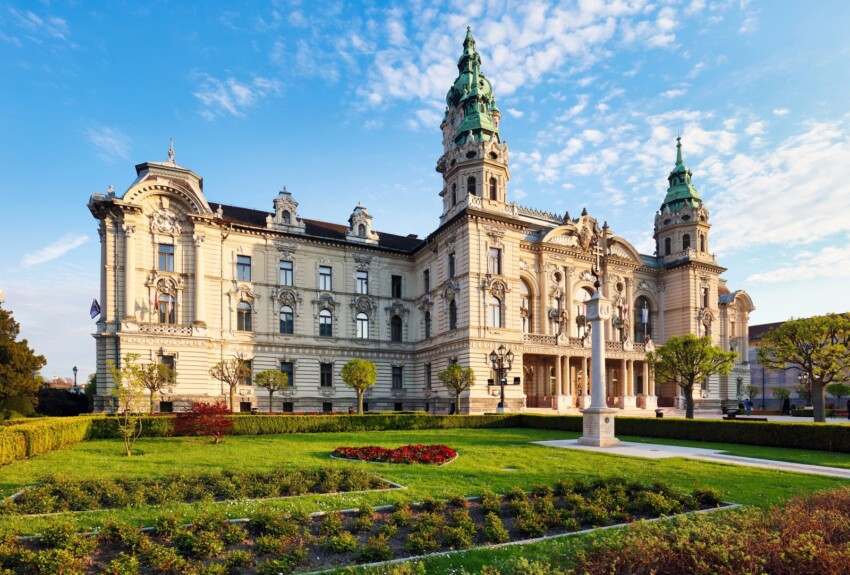
The Old Town Hall (Altes Rathaus) of Győr represents one of the most magnificent and ornate buildings in the historical centre. Built in the 17th century and characterised by its unmistakable bright yellow colour, this building dominates Alter Platz with an elegant and symmetrical façade that testifies to the administrative importance the city achieved in the Baroque era.
The building is striking for the richness of its architectural decoration, with elaborate stucco work, framed windows and an imposing entrance portal emphasising the palace’s representative function. The rooms inside, although not always accessible to the public, preserve period frescoes and furnishings that recount centuries of city administrative life.
Not far from the Town Hall stands one of Győr’s most distinctive monuments: the magnificent Ark of the Covenant Monument. This extraordinary Baroque work, rich in religious symbolism and elaborate decoration, is unique in the Hungarian monumental scene. The gilded sculpture, with its angels, cherubs and biblical representations, testifies to the profound religiousness that characterised the city at the time of its creation and is one of the most popular photo points for visitors.
The area around these monuments is bustling with historic cafés, traditional pastry shops where you can enjoy the famous kürtőskalács (leavened pastry cannoli), and restaurants offering Hungarian specialities, from the famous gulyás (goulash) to lángos (fried pizzas).
Győr offers a good variety of accommodation, reflecting the welcoming character and efficiency typical of Hungarian hospitality. The city, despite being an important industrial centre, has been able to develop a quality hotel offer that meets the needs of both leisure and business travellers.
The historical centre is an ideal choice for those who wish to immerse themselves in the baroque atmosphere of the city and visit the main attractions on foot. Boutique hotels and guesthouses located in restored historical buildings offer elegant rooms with frescoed ceilings and period furnishings, combining traditional charm with modern comforts. The proximity to Széchenyi Square and the main churches makes this area perfect for exploring Győr without using transport.
The Rába Quelle spa area, located slightly outside the centre, attracts those seeking relaxation and wellness. The spa complex, one of the most modern in western Hungary, is surrounded by spa hotels and accommodations offering wellness packages with direct access to the spa. These facilities are ideal for families and those wishing to combine cultural visits with physical regeneration.
Győr enjoys an exceptional strategic location between two major European capitals, lying exactly halfway between Budapest and Vienna. This location along one of the main communication arteries of central Europe makes it easily accessible from all over Europe.
By car, Győr can be reached via theM1 motorway connecting Budapest and Vienna. The distance from Budapest is approximately 120 kilometres (1 hour 15 minutes), while from Vienna it is 130 kilometres (1 hour 30 minutes). The city is also well connected with Bratislava (80 kilometres, 1 hour) and Graz (200 kilometres, 2 hours). It is necessary to purchase the Hungarian motorway vignette, which is available online or at petrol stations at the border.
Rail connections are excellent due to Győr’s location on the main international railway line. The main station offers direct and frequent connections to Budapest (1 hour 30 minutes, trains every 30-60 minutes), Vienna (1 hour 10 minutes) and Bratislava (1 hour). Numerous regional trains also connect Győr with neighbouring towns such as Sopron and Lake Balaton.
The nearest airport is Budapest Ferenc Liszt Airport (120 kilometres), which is well connected to the centre of Győr by direct trains from the airport railway station. Alternatively, Vienna-Schwechat Airport (150 kilometres) offers more extensive international connections.
What's the weather at Győr? Below are the temperatures and the weather forecast at Győr for the next few days.
Győr is located innorth-western Hungary, in the Transdanubian region, in a privileged geographical position that has determined its strategic importance over the centuries. The city lies at the confluence of three rivers: the majestic Danube, the Rába and the Rábca.
It is 120 kilometres from Budapest to the east, 130 kilometres from Vienna to the west, and 80 kilometres from Bratislava to the northwest.


 Hotel
Hotel  Budget accommodations
  Apartments
  Family Hotel
  Luxury Hotel